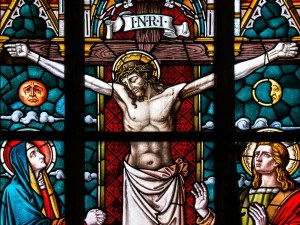
Strive for Balance.

Photo by Pixabay on Pexels.com

Finding balance in life is often a challenge, especially when it comes to navigating the tension between giving to others and taking care of ourselves. How do we ensure that our acts of selflessness don’t leave us depleted, while also avoiding the trap of neglecting those around us?

I see challenges in both giving and taking. As a giver, I risk losing myself by neglecting my own needs, which can lead to resentment or feeling unfulfilled. On the other hand, when I focus too much on taking and ask, “What’s in it for me?” I miss out on the joy of true connection and end up fostering transactional relationships instead of meaningful ones.

In Mark 12:31, He reminds me, “You shall love your neighbor as yourself.” This verse gently underscores that loving others starts with loving myself. I can’t pour from an empty cup. It’s about recognizing that self-love and compassion for others need not be at odds with one another; rather, they can coexist harmoniously.

Even Jesus acknowledged the need for rest, as illustrated in Mark 6:31: “Come away by yourselves to a desolate place and rest a while.” This is a beautiful reminder that taking a moment to pause isn’t selfish; it’s necessary. It encourages me to create sacred spaces in my life where I can retreat, rejuvenate, and gather my thoughts without feeling guilty about the time taken for myself. Such practice gives me clarity and renewed strength that empowers me to face the world again.

As I practice self-love, I become better at self-denial. These two ideas work together, not against each other. Finding balance between them helps me build healthier relationships, both with myself and others. Loving myself allows me to give more sincerely, leading to peace, purpose, and deeper connections.

From resolutions to actions

As the year comes to a close, I find myself looking back at the many plans I made at the beginning of the year that never quite came to fruition. It could be easy to feel disheartened, but I’ve learned that even in those unfulfilled plans, there are valuable lessons to be gained. Each idea that didn’t work out has taught me something important, and those lessons are just as meaningful as any success.

The first lesson I’ve learned is to stop spending time on thoughts that don’t bring value or lead to positive outcomes. I’ve realized the importance of filtering out the distractions and focusing on the thoughts and ideas that truly matter. Proverbs 4:23 reminds me of this wisdom: “Guard your heart with all vigilance, for from it flow the springs of life.” This verse has taught me that our thoughts shape our actions and ultimately guide the direction of our lives.

The next lesson I’ve learned is to never wait for signs or perfect conditions. Mother Mary is a powerful example of this; she was a woman of both action and deep faith, always saying “yes” to God’s call. What made saints truly great wasn’t waiting around for the right moment—it was their willingness to act, even when it required courage. Take St. Teresa of Calcutta, for instance. She didn’t just leave behind inspiring words; she built a living legacy through the Missionaries of Charity. Her actions spoke louder than anything else, and that’s how she became such an important figure in the world.

For much of my life, I’ve allowed ideas to linger in my mind without truly bringing them to life. There were moments where sparks of inspiration would flicker, but they never quite caught fire. I’ve come to realize that few things can weigh on the soul more than an untapped idea or an unrealized dream. It’s as if the potential we carry within us, when left unexpressed, quietly dims our spirit.

This brings me to my third and final realization for this season: I need to focus on ideas that truly inspire me—ideas that ground me and are actually within reach. I’ve learned enough about myself to know that if I’m not genuinely passionate about something, it won’t drive me forward. Similarly, if an idea is driven by selfish motives or an impure intention, it’s not worth pursuing. I’ve reached a point in my life where I understand that my journey isn’t just about me anymore—it’s about the people around me, too. Their lives, their well-being, and the impact I can have on them matter just as much as my own.

I’m excited for the new year ahead, as it’s a chance to leave behind unproductive thoughts and commit fully to living as a man of action for others. Reflecting on Acts 20:35, where Paul says, “In everything I did, I showed you that by this kind of hard work we must help the weak, remembering the words the Lord Jesus himself said: ‘It is more blessed to give than to receive.’” This verse reminds me that true fulfillment comes not from what we receive, but from what we give to those around us.

Gracious is the Lord!

Today, I take a moment to celebrate myself for a job well done. Reflecting on nearly 50 years of life, I realize how much I have grown in wisdom. This isn’t said with pride but with deep humility, recognizing that who I am today is a testament to God’s unending grace.

You may wonder how I know I’ve grown.

The answer lies in what no longer holds power over me. Things that once annoyed, upset, or infuriated me now barely touch me. I’ve learned to conserve my time and energy for what truly matters, letting go of what isn’t worth either.

I have shifted my gaze forward, leaving the past where it belongs. Mistakes once made cannot be undone, and dwelling on them serves no purpose. What’s done is done. My focus is now on what lies ahead.

Life, in all its complexity, has become something I can appreciate as it is. Problems often don’t have a single solution, and that’s okay. I’ve learned to embrace the gray areas and live in the present.

I can admit when I’m wrong, embracing the humility that comes with acknowledging my limitations. As Leo Tolstoy wisely said, “We can only know that we know nothing, and that is the highest degree of human wisdom.”

I accept that I am not perfect. Sooner or later, I may falter again, but I find peace in knowing that God holds the ultimate power to restore and renew me.

I understand that some things—and some people—cannot be changed. Yet, on the other hand, I know that I can change. Through patience and love, I have the ability to influence others, and in time, these small, consistent efforts can bring about meaningful change in them as well.

This journey of wisdom, however, is far from over. There is so much more to learn, to do, and to become. But all of this—every step forward—is a result of God’s grace. God works in us daily, transforming and moulding us into better versions of ourselves.

Wisdom takes time, but God is patient. All we need is to listen for His voice, moment by moment, and trust in His divine plan.

2 Corinthians 5:17 : Therefore, if anyone is in Christ, he is a new creation. The old has passed away; behold, the new has come.

When you get weary of hearing your own voice, listen to God’s.

The view from my window

I thank God for providing me with moments and spaces to simply be still. Spending time at a retreat at St. Francis in Hillsborough, Auckland, is always a grounding and centering experience. As someone who leads a busy life and wears many hats, I make it a priority to attend a retreat at least once a year. Next year, I plan to go even more frequently—because now, more than ever, I realize how much I need it.

I’ve learned to recognize when I need stillness. Balancing my roles at church, home, and school can sometimes feel overwhelming. Just being a teacher alone is a challenge. One moment, I feel energized and inspired to teach; the next, I’m exhausted and drained. It’s a constant cycle of highs and lows, a rollercoaster of emotions and energy. And through it all, it’s my own inner voice that I hear.

Over time, I’ve realized that when my voice dominates and begins to wear me out, I need to pause, slow down, and listen to another voice—the voice of God. His voice is comforting and restorative. These days, I’ve come to understand that I can only hear Him in moments of silence.

In the retreat, I found solace in walking through the Labyrinth of Prayer, a sacred space nestled among the trees. Unlike a maze, the labyrinth has no dead ends or tricks. It’s a simple, clear pathway that allows you to walk freely, carrying your burdens, questions, and prayers to God. As I walked, the noise within and around me seemed to fade away. Step by step, I felt lighter, and as I reached the center of the labyrinth, I could hear God’s voice again.

Listening to God’s voice is deeply healing. When I call out His name in silent prayer, over and over, it shifts my focus away from myself and back to Him.

Indeed, He is my God of silence.

Ask God questions; He answers..

By Dave Canovas

How far ahead did you see when your present was too agonizing? How far back did you have to look to remember that you were everything but a criminal?

How deep were those wounds of rebuke? When rebuked, how did you not blame?

How did you not break when they shattered you? The thorned crown, the scarlet robe – how did you take the shame?

When you fell carrying the weight of our sins, did you think us worthy? When you saw your mother, did you find solace in her gaze or felt disgrace?

As they buried the first nail on your flesh, were you afraid? When you were up, did you look down and see a multitude still worth loving?

When you rose, you showed us you are our God and King. But how were you not reminded of ruthlessness by those scars, that instead of counting the cost, you uttered “peace be with you”?

With each question, let me hear your voice, Lord. Let your voice silence my chaos; quench my longing. Let it heal me even for a moment.

Lord, let your voice give me rest.