Where can I go from your Spirit?

Dave Canovas

Where can I go from your spirit? Where can I flee from your presence? (Psalm 139). Desiring God of Silence, I booked a retreat, Quietude at St. Francis, Hillsborough. To me, it is like coming home to God, whom I might have forgotten, forsaken, or sidelined the past year. Outside in the world, there is always this constant and exhausting tug-of-war between sin and goodness. Without a refill, the well, I realize, will soon dry up. It is not a good place to be in the world when you are thirsty. And I know this to be true: whoever drinks of the water that I shall give shall never thirst again (John 4:11).

A lot of times when you are out in the world, memories of home rush in, reminding you of the comfort and warmth of familiar places. These moments make you long to return home and find rest in what you know. The outside world can feel overwhelming, but wanting to come home to God is always a good first step.

When I finally came home to this place of retreat, it felt like I was quite slowly inching my way back to the Father. This could be the feeling of when one has left home for far too long; you forget what being home actually feels like. The theme of the weekend was “The more you reveal yourself to God, the more God will reveal Himself to you.” I came to trust God no matter what because our Father, without a doubt, has a way of nurturing us back to a place of growth and familiar warmth.
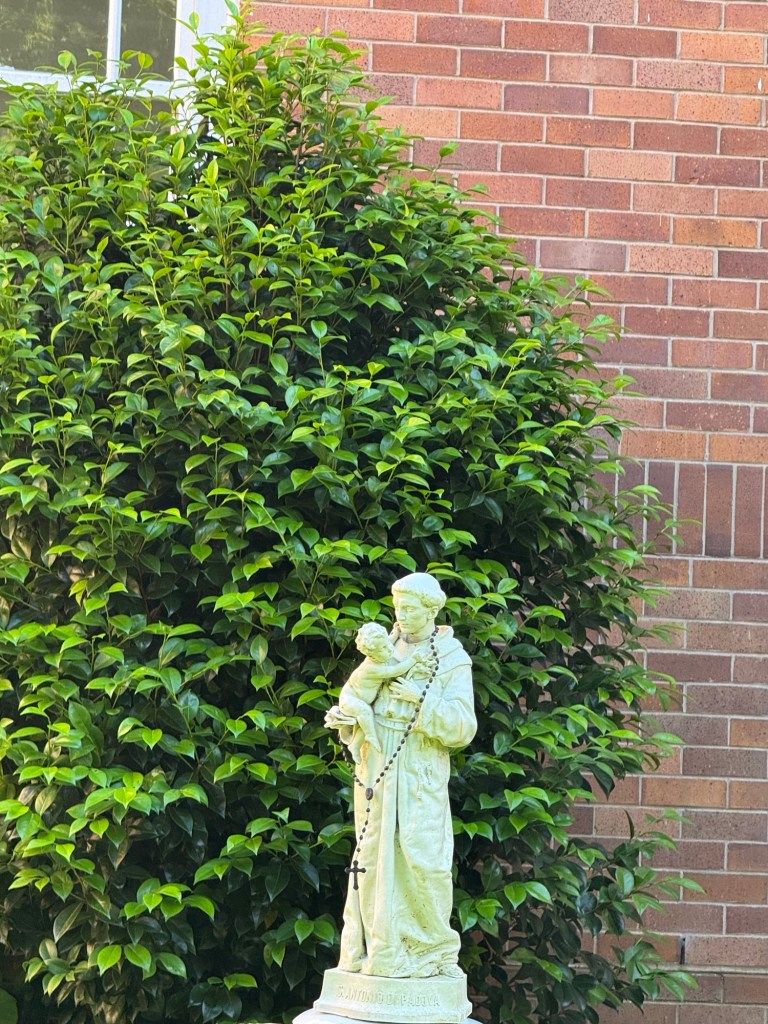
When we come home, our Mother welcomes us with affection and truth – truth that everything in the world is but temporary and a Mother’s embrace can nurse us back to peace. In the Spirit that proceeds from the Father, through His Son, I am again reminded of the Love that reassures me with His constant presence, light, and forgiveness. He hears my voice, and He knows me, and He assures me that no one shall snatch me out of His hand (John 10:27-30).
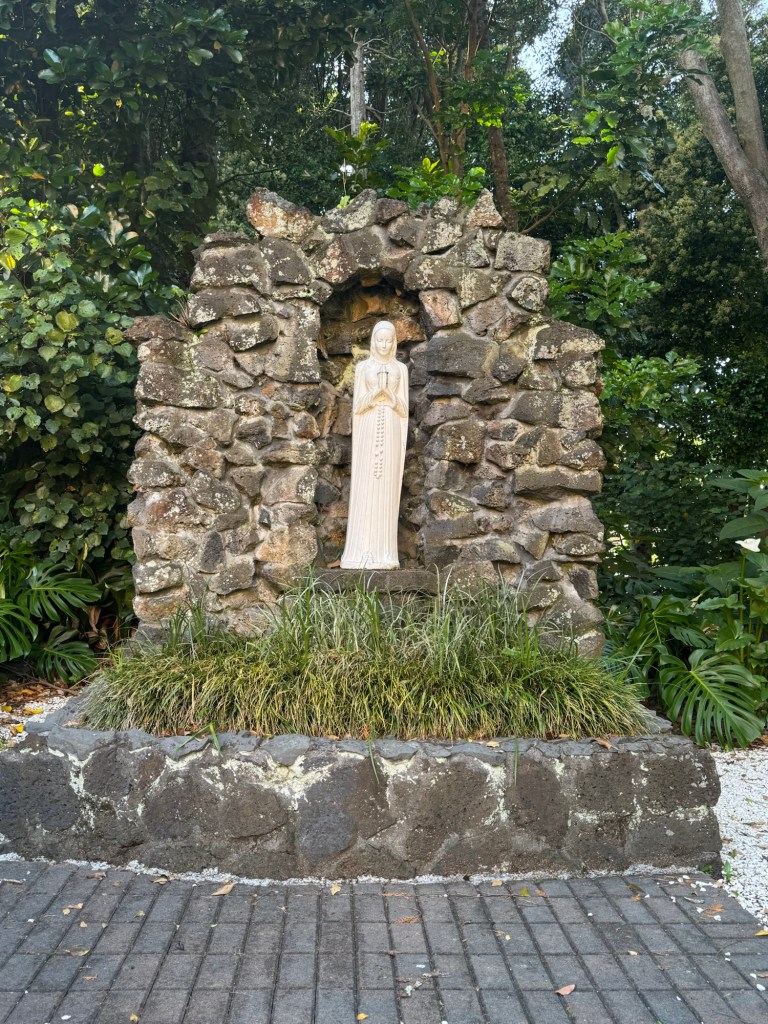
Soon, I will leave this place, but I will carry the purpose of returning home: it helps me face the world without fear. God knows my every moment; He understands my thoughts from afar (Psalm 139). In times of doubt, I find comfort in knowing I am never alone, for His presence surrounds me like a warm hug. Even when I walk through dark times, I will not fear evil, for He is with me; His rod and staff comfort me (Psalm 23:4).

Does hope fade?

Dave Canovas

Photo by Dee Onederer on Pexels.com

I may have mistaken what I thought was hope for something much less. Often used to mean waiting for a better life this world can offer, hope does feel like it constantly eludes us. So many of us, forlorn and broken, are praying for hope, yet it seems to slip away time and again. Instead of drawing us closer to God, we often find ourselves drifting further from Him.

I often pray hoping for ease and happiness that this world could bring. But hope tied into this world renders me exhausted and still feeling hopeless.

True hope is exhilarating. But if our hope is rooted in the world, we are clinging to false hope, which only leads to feelings of hopelessness. When we suffer in our bodies and in or mind, we pray that we be eased of these. Yet, hope is not merely the wish for ease, for what happens when that ease fades? Will we find ourselves hopeless again? That kind of hope is fleeting.

True hope is the healing of the soul, and that healing is found in knowing that only in God do we find true peace. It draws us nearer to Him. If praying for hope leads us away from God, then we must be praying wrongly. If we pray for hope and find the strength to hold fast to His love, even in sickness and pain, we know that we have found hope. Hope is the assurance that through God’s love, we can overcome all our fears, anxieties, restlessness, and sorrow. In the grander scheme of things, we find comfort in knowing that soon, we will be with Him in Paradise.

Prayer: Father, Son, and Spirit, never leave me in times when my hope seems to fade. Help me realise that the hope I cling to, which fades away, is not true hope. Let me know and feel the hope that only comes from You, the hope that is true and everlasting, the kind of hope that never fades.

Holy Spirit, descend upon me.

Dave Canovas

Matthew 18:20 reminds us: “For where two or three gather in my name, there I am with them.”

Witnessing my church community in praise and worship often reminds me of that upper room experience, where the Holy Spirit descended upon the disciples, igniting them with peace and courage.

Yet, there are times when I can only stand among them, feeling hollow—present in body but distant in spirit. The same thing happens at Mass: though my body is there, my mind drifts, preoccupied or restless, and my heart, troubled or worse, empty.

When nothing in me is moved nor something in me, roused; I long for The Spirit to descend upon me. To me, the invitation for the Holy Spirit to come is often a perilous journey, a difficult surrender. Sometimes, the struggle to receive the Spirit is the result of the numbing effects of sin or the complacency that dulls the soul.

I’ve noticed that when I struggle to invite the Spirit to move within me, it often gives way to a deep despair and longing. Yet even this emptiness becomes a sign—a quiet reminder from the Spirit that I am nothing without Him, and that life apart from His presence is an arduous and lonely path. The Holy Spirit does not wait for perfection, but longs to enter even the most desolate and the most broken of hearts.

When I begin to feel that transformative despair, I often retreat to myself and it is when the Helper gently changes me, breathing life into the places I had long kept hidden.

In my own moments of anguish, I turn to figures like David and Job, whose vulnerability before God was unshielded. They laid bare their deepest sorrows and confessed their wretched shame without hesitation, teaching me that even in the midst of brokenness, the Spirit also draws near in your aloneness.

David and Job did not hide their suffering; they placed their sorrow openly before God, trusting that even their cries and questions could be received by His mercy.

Psalm of David: How long wilt thou forget me, O LORD? for ever? how long wilt thou hide thy face from me?

Job 3:25: “For the thing that I fear comes upon me, and what I dread befalls me.”

From David and Job, I draw hope, for their cries of despair became songs of praises and redemption.

Psalm 150: 1-6 “Praise the Lord. Praise God in his sanctuary; praise him in his mighty heavens. Praise him for his acts of power; praise him for his surpassing greatness. Praise him with the sounding of the trumpet, praise him with the harp and lyre,  praise him with timbrel and dancing, praise him with the strings and pipe,  praise him with the clash of cymbals, praise him with resounding cymbals. Let everything that has breath praise the Lord. Praise the Lord.”

Job 42:12: The LORD blessed the latter part of Job’s life more than the former part. He had fourteen thousand sheep, six thousand camels, a thousand yoke of oxen and a thousand donkeys.

Come, Holy Spirit, and turn this hollowness into yearning. Transform this anxious stillness into a quiet longing, that I may open my heart and welcome You. Move within me, change me, and grant me the peace that only You can give. Amen.

Following Mary’s path of sorrows

Dave Canovas

This day has brought me to when Joseph and Mary brought the infant Jesus to the temple—“as every firstborn male must be consecrated to the Lord” (Luke 2:23). It should have been a moment wrapped in joy. Yet, that sacred moment was veiled by a shadow, as Simeon, filled with the Spirit, lifted his gaze and uttered a prophecy that would leave a mother’s mind perplexed and her heart, broken:

“…And a sword will pierce your own soul, too.”

What an agonising weight those words must have brought – unseen yet cutting deep within Mary’s heart – a premonition of a sorrow yet to come. In that singular moment of irony, present joy and foreboding sorrow; stood side by side. It is quite difficult to fathom, I suppose.

With bated breath, years passed. From the hurried flight to Egypt, to the quiet ponderings in her heart, I could only imagine that Mary had borne it all. In those years, the torment of that prophecy must have followed Mary like a very dark dream until that harrowing day on Golgotha, when Mary stood beneath the outstretched arms of her crucified Son. No prophecy could have shielded her for the agony that washed over her. The sword found its mark on her beloved Son and tore into her very soul, just as Simeon had spoken.

Our own sufferings at times, arrive like thieves in the night – unforeseen, uninvited—like the death of one we hold dear. No heart is ever truly prepared for such sorrow; it pierces deep, where words of comfort cannot reach. And yet, not all suffering is sudden. Some burdens linger quietly, like a mental or physical sickness we battle – an unseen torment that refuses to let go. It weaves through flesh and thought, present in every waking moment.

Yet in this, we are not alone.

Our Lady of Sorrows has walked this path before us—her heart pierced by grief, yet unwavering in love. She shows us that even in the deepest ache of anguish, there remains a quiet hope. Her silent contemplation beneath the Cross, her steadfast endurance in the face of unspeakable sorrow, calls us not to flee from suffering but to meet it with faith. For within every sorrow, the mystery of Christ’s redeeming love is already at work.

Seeing Through Judas’ Eyes

Dave Canovas

In recent days, I’ve drifted—perhaps unconsciously—into the psyche of Judas. Perhaps unknowingly, in my search for something to reflect on this Lent, I was drawn into the mind of another—one not unlike our own: vulnerable, pragmatic, and conflicted.

On the night before the Passover feast, as darkness gathered, Jesus was arrested—and it was then, as Luke tells us, that Satan entered Judas.

I have often wondered why Judas did what he did—why he betrayed Jesus. His name endures through time; his name synonymous to treachery. Yet, according to Matthew’s account, when he realised the weight of what he had set in motion—that Jesus was to be crucified—he tried to return the silver he had received and then took his own life.

Was he torn by his anguish? This wondering led me to Paul Claudel’s work The Death of Judas, where the playwright dares to enter Judas’s mind. Claudel imagines the chaos within him—not merely the act of betrayal, but the inner fracture of a man shaped by reason and pragmatism, suddenly immersed in three years of radical teachings, divine mystery, and the immeasurable grace of Jesus. Judas, in Claudel’s telling, is not simply a villain but a soul at war with itself.

In contemplating Judas, I’ve begun to see fragments of him in ourselves—in our doubts, our compromises, our quiet betrayals. Though John names him as the keeper of the moneybag who sometimes took from it (John 12:4–6), I can’t help but think: he once believed for how else could he have abandoned all to walk in the dust of a rabbi, to share in miracles, to sit at the same table of grace?

Judas walked with Jesus. He ate at His table, shared in His laughter, prayed in His presence, and listened to His voice. He was close—physically, spiritually—yet despite this sacred proximity, Satan found a foothold in his mind and slowly corroded his soul.

The weight of betrayal—of sinning against the very One who called him friend, the Lover of his soul—must have been unbearable. The guilt, gnawing and relentless, eventually consumed him. In that anguish, Judas succumbed to the enemy’s whisperings. We, too, have faced that battle. The heaviness. The numbness. The slow erosion of hope. It is not easy.

Yet I believe that to gaze through Judas’s eyes—to truly behold his torment—is not to glorify despair, but to witness the cost of turning away from grace. There is redemption even in this gaze. We are not meant to remain chained to our guilt. Christ calls us not to dwell forever in our darkness, but to rise, again and again, into light—into forgiveness, into healing.

If Judas’s story tells us of the tragedy of despair, it also reminds us of the urgency of grace through prayer. We are not beyond redemption. Even in our deepest guilt, Christ calls us not to end our stories in darkness, but to step back into His redeeming light.

Rushed lives, lost meaning

By Dave Canovas

Photo by Taras Makarenko on Pexels.com

I know I’m rushing through life mindlessly when even my prayers feel hurried.

We live in an age of relentless acceleration. News reaches us within seconds, and life spins at such a dizzying pace that multitasking often feels like the only way to keep up. While multitasking can be productive at times, I’ve learned to listen to my heart. It sends a clear message: if rushing leaves me anxious or stressed, I need to slow down. Prayer can be a powerful tool to ground us, but if we rush through it, it risks becoming just another task, leaving life feeling chaotic and devoid of meaning.

For me, living at a hurried pace does more harm than good. It strips away my ability to focus and deliver excellence at work. It predisposes me to snap judgments and anger, especially in challenging conversations. I’ve found that slowing down helps tame my tongue and fosters clarity. But the greatest harm rushing does is that it robs me of patience and self-control—two fruits of the Holy Spirit that are especially essential in today’s fast-paced world.

In my classroom, I’ve seen the benefits of slowing down firsthand. When my students are restless, creating a slow, calm routine transforms our interactions. It fosters mutual respect and encourages self-regulation. When we slow down, we focus more deeply—on ourselves, on others, and on the present moment. We begin to notice and appreciate the journey rather than fixating on the destination. This shift allows us to discover new meanings and insights that would otherwise go unnoticed. By slowing down, we give patience the space to grow.

Prayer is one of the most profound ways to slow down. When we pray with intention—cherishing each word and speaking from the heart—it becomes an act of consecration. In these moments, we hear God’s voice more clearly. His voice soothes, heals, and refreshes our souls. Prayer is our sacred time with God, and He never rushes us. So why should we rush Him?


Pleasing God: Embracing Our Flaws and Finding Grace

Dave Canovas

Photo by Samad Deldar on Pexels.com

Is what I do truly pleasing to God? It’s a question that often lingers in my heart. Whenever doubt arises, I find myself returning to one thing: my intentions.

Emotions are complex and often come disguised. When someone else achieves success, you might smile and celebrate outwardly, yet beneath the surface, envy quietly festers. When others throw hurtful remarks your way, you might pretend it doesn’t bother you, but deep down, resentment simmers. Even acts of kindness can sometimes carry hidden motives—an unspoken desire for acknowledgment or praise.

When these tangled emotions take hold, it’s important not to suppress them. Instead, face them with honesty and grace. Our hearts are intricate landscapes, filled with both light and shadows. Acknowledging these emotions doesn’t make us weak; it makes us human. Only through acceptance can we begin to release their grip.

From acceptance, we can move toward surrender—offering these struggles to God through prayer. I’ve always found comfort in the imagery of “washing away” found in Scripture. Psalm 51:2 says, “Wash me thoroughly from my iniquity, and cleanse me from my sin.” There’s something so tender and restorative in that metaphor—a promise of renewal.

Is what I do pleasing to God? The answer begins to take shape when I allow Him to transform my heart. I bring my burdens—anger, envy, pride—and lay them at His feet, trusting Him to cleanse and renew me. In that surrender, I find peace and the assurance that my imperfect offerings can still be made holy through His grace.